In your plant, the best workers do not leave because of the salary. They leave exhausted. Burnout syndrome in manufacturing has a recognizable pattern: months of rotating shifts, constant pressure on productivity and no visible sign until the worker asks for leave or resigns.
83% of industrial workers will present symptoms of burnout in 2026, according to data from Eagle Hill Consulting. Replacing a qualified operator costs between 50% and 60% of their annual salary. The problem is not the turnover — it is what creates it.
What distinguishes burnout from normal fatigue
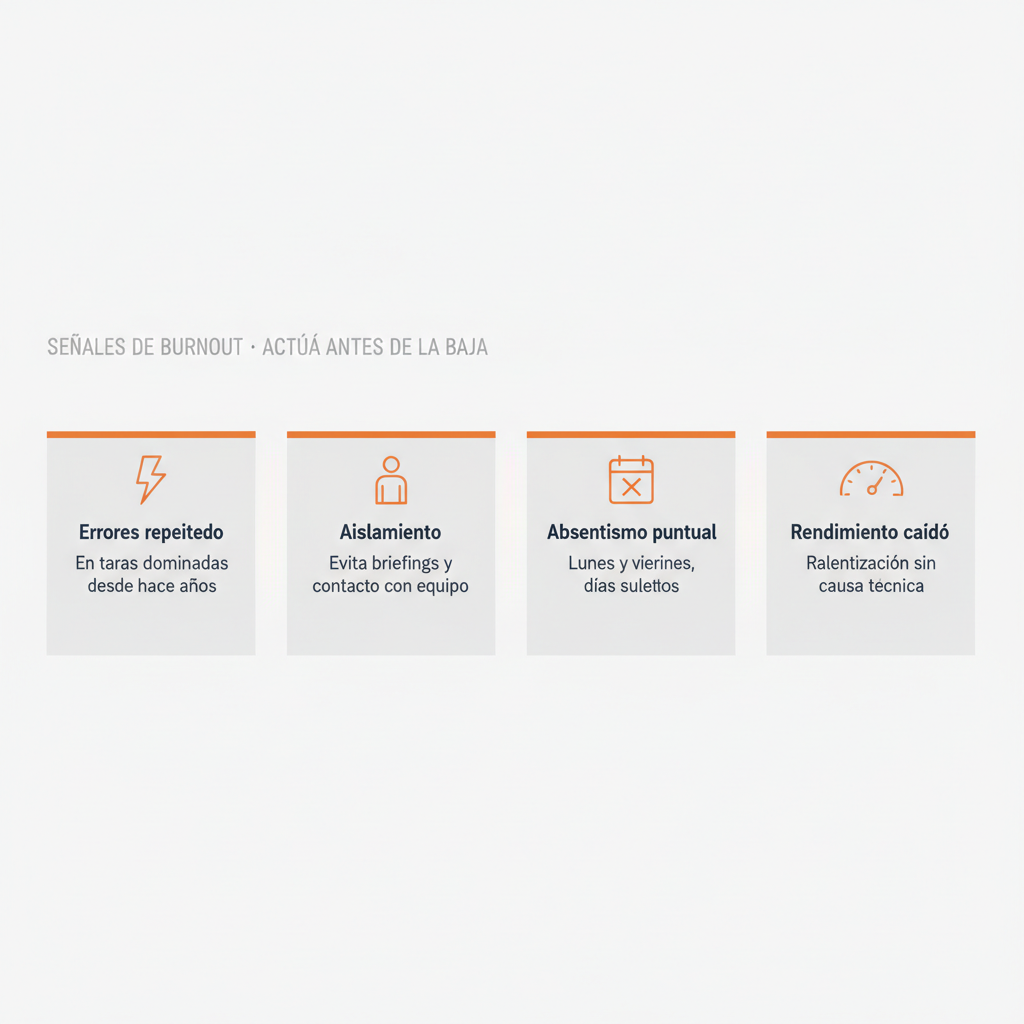
Your ORP technician knows the difference between a tired worker at the end of the shift and one who has been operating at the limit for months. Burnout has three signs that middle managers see before anyone else:
Repeated errors in tasks that the operator has been doing for years without problems.
Isolation from the team: stop participating in briefings, eat alone, avoid contact.
Increase in absenteeism on individual days, especially Mondays and Fridays.
These signs appear between three and six months before dismissal or resignation. The margin to act exists — most companies lose it because they do not have a system to detect it.
Why manufacturing has a special exhibition
Manufacturing environments combine several factors that the WHO identifies as direct triggers of chronic burnout: rotating shifts that alter the circadian rhythm, high cognitive load on high-precision lines, and constant pressure on cycle times.
Added to this is an element that the draft reform of the PRL Law 2026 recognizes for the first time: algorithmic pressure. Productivity monitoring systems that generate real-time alerts on individual performance create a form of chronic stress that the current regulations did not require to be evaluated. Starting in 2026, yes.
An operator who knows that every minute of his performance is recorded and compared to the equipment works in a state of permanent activation. That's not motivation — it's accumulated wear and tear.
The actual cost that does not appear in the P&L
Leaves due to mental health have skyrocketed by 490% in Spain since 2018, according to data from Coverflex. But the visible cost of casualties is only part of the problem. The hidden costs of burnout in an industrial plant include:
Quality decline: more errors, more rework, more online loss.
Workplace accidents: exhausted workers have slower reaction times and a lower ability to pay attention to risks.
Loss of operational knowledge: the operator who leaves takes with him years of experience in the process that no manual includes.
Replacement cost: between selection, training and learning curve, replacing a qualified operator can exceed €15,000.
A plant with 10 long-term losses due to burnout per year loses between €100,000 and €175,000 in direct costs alone. Not counting the loss of productivity or accidents associated with exhaustion.
Retention without compromising safety: what works in the plant
Companies that have reduced turnover due to burnout in manufacturing share three specific practices that your team can implement without changing the agreement or the shift model:
Planned internal rotation: changing operators between positions of different cognitive load within the same shift reduces mental fatigue without losing productivity.
Early signals in briefings: middle managers learn to identify the three warning signs and have a clear protocol to escalate it to PRL before the loss arrives.
Evaluating the impact of monitoring systems: review whether automatic performance alerts generate measurable psychological pressure and adjust reporting thresholds or frequency.
None of these measures require significant investment. They require visibility into what is happening in the plant in real time.
How Computer Vision Detects Burnout Before Lowness Hits
Safe analyzes plant behaviors that middle management cannot continuously monitor: changes in posture, reduction in movement speed, fatigue patterns in repetitive operations. It does not replace the ORP technician — it gives you concrete data to act before the problem escalates.
When an operator has been showing physical signs of exhaustion for weeks, Safe detects and escalates it. Your ORP technician can intervene with a three-month margin instead of receiving surprise medical leave.
Talk to our team about how Safe helps reduce burnout turnover in your plant